Category Focus/categories/developer-tools
Developer Tools AI Tools
Discover and compare the best developer tools AI tools and software. Browse 449+ curated tools with reviews and rankings.
Projects tracked
449
Sort mode
RECENT
Page
2
Discover and compare the best developer tools AI tools and software. Browse 449+ curated tools with reviews and rankings.
Projects tracked
449
Sort mode
RECENT
Page
2

Omniflow is an AI-powered development platform that addresses the common problem of AI-generated applications breaking during iteration. Unlike most AI builders that generate apps once and become unreliable during subsequent changes, Omniflow maintains alignment between specifications, design, and code throughout the entire product lifecycle. The platform enables users to plan product specifications including features, flows, and constraints. Users can preview their UI before any code is written, ensuring the design matches their vision. Omniflow generates full-stack products that are aligned to both the specification and design requirements. When changes are made, the platform updates everything in sync without requiring re-prompting or rebuilding. Omniflow operates on the principle that specifications should drive both design and code, creating a single source of truth. This approach eliminates the drift that typically occurs between what was intended and what gets built. The platform ensures that all components—specifications, design elements, and code—remain synchronized as the product evolves. The tool is specifically built for founders, product managers, and teams who need to ship products that accurately reflect their original intentions. By maintaining this alignment, Omniflow helps teams avoid the common pitfalls of AI-generated code that diverges from the intended design and functionality. Omniflow integrates with several technologies including Claude by Anthropic for AI capabilities, Tiptap for rich text editing, and Neon for database functionality. The platform offers free options and is currently launching with a 15% discount for early adopters.
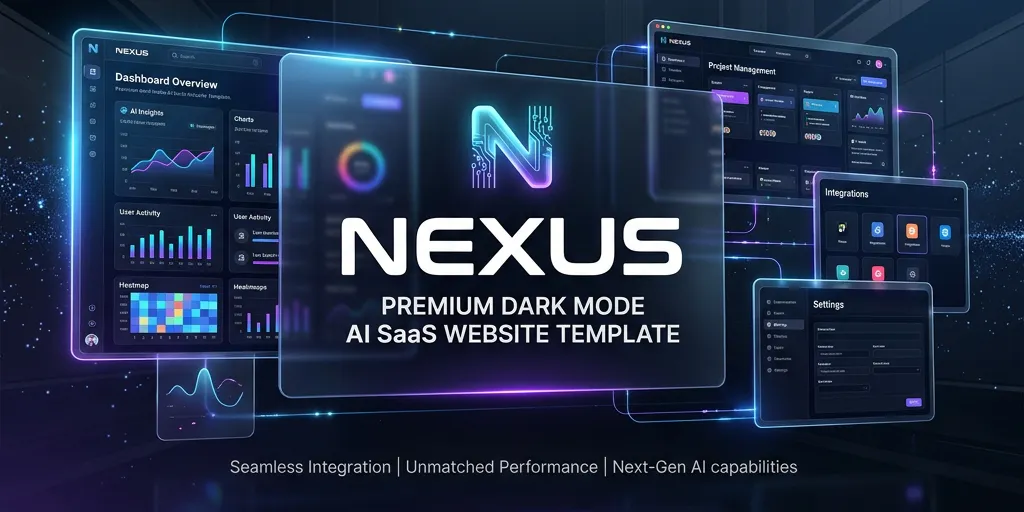
Nexus is an ultra-premium, multi-page HTML/CSS template kit designed specifically for AI and SaaS companies. It aims to provide startups with a high-end website appearance that rivals expensive custom agency builds, featuring modern design elements and interactive effects. The template kit includes 8 fully responsive pages covering essential sections like Home, About, Blog, and Auth. It incorporates custom glowing cursor that tracks interactions, magnetic CTAs that pull toward the user's mouse, mouse-tracking glow effects on feature cards, and infinite CSS marquee for social proof. The design emphasizes a dark mode aesthetic with glassmorphism elements. Built using pure, clean HTML/CSS/JS with zero heavy framework bloat, Nexus focuses on high-end micro-interactions typically reserved for expensive custom websites. The template avoids the flat, boring appearance common in overused frameworks, instead offering cutting-edge visual effects that create a "WOW" factor for modern AI startups and SaaS companies. The template works by implementing custom CSS and JavaScript interactions that respond to user mouse movements and interactions. The magnetic buttons physically appear to pull toward the cursor, while glow effects follow mouse position across feature cards. These micro-interactions are designed to create an engaging user experience without requiring complex framework dependencies. Nexus addresses the need for AI startups and SaaS companies to have websites that reflect their cutting-edge nature. By providing agency-level design quality in a template format, it allows startups to achieve a premium online presence without the cost of custom development. The glassmorphism aesthetic and dark mode design cater specifically to modern tech company preferences. The template is targeted at developers and founders building AI startups and SaaS companies who want their websites to stand out from typical template-based designs. It appeals to those seeking high-end visual effects and interactions without the complexity of heavy frameworks, offering a lightweight solution that maintains performance while delivering premium aesthetics.

Wubble is an AI-powered audio studio that enables creators to produce royalty-free music, AI voiceovers, and sound effects directly from text prompts. The platform consolidates multiple audio generation capabilities into a single browser-based tool designed for rapid, commercial-ready audio production. The core offering centers on three main audio types: royalty-free music generation, AI voiceover creation, and sound effects production. Users input descriptive prompts, and the system generates corresponding audio assets that can be used commercially without licensing concerns. The browser-based interface eliminates the need for specialized software installations or technical audio production expertise. Wubble's approach streamlines audio content creation by packaging advanced AI audio generation into an accessible web application. The platform targets speed and convenience, allowing creators to generate multiple audio formats from a unified prompt-based interface. All generated audio is designated as royalty-free, addressing common licensing restrictions that content creators face when sourcing music and audio elements. The tool serves creators who need quick turnaround on audio assets without negotiating complex licensing agreements or hiring voice talent. By combining music, voiceover, and sound effect generation in one platform, Wubble reduces the typical fragmentation creators encounter when sourcing different audio types from separate tools or libraries. Wubble operates as a web-based platform, making it accessible across devices with modern browsers. The service appears to target content creators, video producers, podcasters, game developers, and other media professionals who require customizable, license-clear audio elements for their projects.

Percio is an AI-powered usability testing platform designed to simulate real user behavior and identify areas for improvement within digital products. The tool creates AI personas that mirror actual users, enabling teams to conduct usability tests directly within their existing coding workflows. The platform's core capability lies in its ability to navigate applications like a real user would, automatically detecting usability issues and improvement opportunities. By creating AI personas that match target user profiles, Percio provides insights into how different user segments interact with products. This approach allows development teams to integrate usability testing seamlessly into their development process without disrupting their workflow. Percio operates by generating AI-driven user personas that replicate the behavior patterns of actual users. These AI agents navigate through applications, performing tasks and interactions that real users would typically execute. The system analyzes these interactions to identify usability problems, navigation difficulties, and areas where user experience can be enhanced. The testing process is designed to integrate directly into coding workflows, making it accessible for developers and design teams to implement usability testing as part of their regular development cycle. The platform offers free options for users looking to implement AI-powered usability testing in their projects. By automating the usability testing process with AI personas, Percio aims to help teams ship better products that effectively communicate with their intended user base. The tool is particularly focused on enabling anyone to improve their product's user experience through systematic, AI-driven testing methodologies.

shout is a real-time terminal broadcasting tool designed for AI agents and developers. It streams terminal sessions to the web, allowing anyone with a browser to watch live or replay sessions later. The tool automatically redacts sensitive information like AWS keys, tokens, and API keys from the broadcast while preserving the full output locally. Key features include real-time streaming via SDKs and MCP servers for AI agents, CLI access for developers, instant screen visibility for late joiners, and automatic secret redaction. Sessions are recorded for replay and can be embedded anywhere. The entire platform is open source, providing transparency and customization options for users. The system works by starting a session through an SDK or MCP server, which then streams terminal output to shout.run in real time. Viewers can watch live sessions through a browser link, and late joiners immediately see the current screen state. All sessions are automatically recorded for later review and can be exported as needed. shout addresses the common problem of not knowing what AI agents are doing in the terminal. Tools like Claude Code, Cursor, and Windsurf run shell commands without visibility into their actions. shout provides a solution by broadcasting these sessions, making it easy to monitor agent activity and review recordings when issues occur. The platform is built with a modern tech stack including Node.js and node-pty for the CLI, Cloudflare Workers and Durable Objects for infrastructure, Next.js frontend with xterm.js for the web interface, binary WebSocket protocol for streaming, and Rust WASM for terminal state snapshots. This architecture ensures reliable real-time streaming and efficient terminal state management.

DecisionBox is an open-source autonomous AI discovery agent designed to connect to data warehouses and databases. The system runs autonomous AI agents that write and execute SQL queries, then surfaces validated insights and actionable recommendations without requiring users to ask questions or write queries. The platform supports multiple data warehouse providers including BigQuery, Redshift, Snowflake, Databricks, and PostgreSQL. For PostgreSQL specifically, it includes safety features such as read-only access by Postgres role, TLS encryption by default, capped connection pools, per-query timeouts, and no write permissions. The system operates entirely through read-only access with no DDL or DML capabilities. DecisionBox works by connecting to databases and running autonomous discovery loops. Users connect the agent to their database, point it at domain packs, and the system writes its own SQL queries, validates findings against the data, and produces a ranked backlog of insights and recommendations. The PostgreSQL integration supports both field-by-field configuration and full DSN connections, making it compatible with managed PostgreSQL services including RDS, Supabase, Neon, Railway, Fly.io, Aiven, Crunchy, and others. The system is designed for production environments with safety measures including capped connection pools, per-query timeouts, and read-only access enforced at the database role level. All code for the PostgreSQL provider is available in the public repository under AGPL v3 license. The same autonomous agent runs across all supported database platforms, allowing organizations to maintain consistent discovery capabilities as their data infrastructure evolves. DecisionBox is suitable for organizations using PostgreSQL in production environments who need autonomous data discovery capabilities. The platform is particularly valuable for teams managing live traffic databases who require insights without impacting performance. The open-source nature and read-only design make it appropriate for security-conscious environments.

SonnetPulse is a lightweight desktop workspace designed specifically for writing technical documents using LaTeX. It operates completely offline, eliminating the need for internet connectivity while providing a streamlined environment for academic and technical writing. The application focuses on simplifying the traditionally complex process of LaTeX document creation by offering a modern, intuitive interface that reduces the typical configuration burden associated with LaTeX editors. The workspace includes several key features that enhance the writing experience. It provides zero-config Tectonic compilation, which means users don't need to worry about complex LaTeX distribution setups or package management. The live synchronized PDF preview updates instantly as you edit, allowing for immediate visual feedback without manual compilation steps. The offline-first workflow ensures that all document processing happens locally on your machine rather than relying on cloud servers, resulting in faster processing times and complete privacy for your work. SonnetPulse supports large projects and academic templates, making it suitable for extensive documents like theses, research papers, and technical documentation. The clean and focused writing environment minimizes distractions and clutter commonly found in more complex LaTeX editors. Fast local rendering ensures that document compilation happens quickly without the delays typically associated with server-based solutions. The interface adapts quietly to user habits over time, creating a more personalized and efficient writing experience. The application works by providing a contemporary setup for creating LaTeX texts that appears directly on screen. It supports detailed drafting through structured tools while maintaining clarity in its interface, which focuses on precision. Built for stability, it allows extended writing sessions without interruption. The environment behaves predictably, responds clearly to inputs, and fits naturally into routine workflows. Over time, interaction becomes less rigid and more aligned with how users move between ideas and output. When crafting conference papers, theses, reports, or documentation, focus remains uninterrupted because SonnetPulse operates quietly in the background. Writing flows naturally since interference is minimized through deliberate design choices. The aim is to make using LaTeX steady, quick to react, yet simple during daily tasks. The tool adapts without delay and remains smooth through regular use, making technical document creation more accessible to learners, scholars, coders, and documentation authors.
LaraPlugins.io is a specialized directory that evaluates Laravel packages by analyzing over 80,000 versions to generate automated Health Scores. The platform assesses packages based on maintenance activity, testing coverage, and adherence to community standards, providing developers with a quick way to identify trustworthy dependencies for their Laravel projects. The core functionality centers on automated health scoring that eliminates guesswork when selecting Laravel packages. By examining maintenance patterns, testing practices, and community engagement metrics, LaraPlugins assigns scores that reflect the overall reliability and sustainability of each package. This systematic approach helps developers avoid outdated or poorly maintained dependencies. The platform serves as a comprehensive resource for the Laravel community by maintaining an extensive database of packages and their historical versions. Rather than manually researching package quality through multiple sources, developers can access consolidated health information in one location. The scoring system provides immediate visual feedback about package reliability. LaraPlugins operates by continuously monitoring and analyzing package repositories, tracking metrics related to maintenance frequency, test coverage, documentation quality, and community adoption. The automated system processes this data to generate objective health scores that developers can use to make informed decisions about package selection. The primary benefit is significant time savings during package evaluation, reducing the risk of incorporating unstable or abandoned dependencies into Laravel projects. Developers can quickly identify actively maintained packages with strong testing practices and community support, leading to more stable and secure applications. The platform targets Laravel developers seeking reliable package solutions, from individual developers to development teams working on commercial projects. By providing objective health assessments, LaraPlugins supports better decision-making throughout the Laravel ecosystem.

MarkIt is a trade compliance infrastructure platform designed to streamline import workflows for enterprises. The system focuses on managing classification processes, maintaining audit trails, and ensuring trade compliance governance across multiple departments including legal, procurement, and logistics teams. The platform provides enterprise-grade solutions for managing trade compliance requirements throughout the import process. It handles classification management, which is critical for proper tariff codes and duty calculations. The system maintains comprehensive audit trails to ensure compliance tracking and regulatory reporting. Trade compliance governance features help organizations maintain adherence to international trade regulations and internal policies. MarkIt operates across three key workflow areas: legal teams use it to ensure regulatory compliance and manage risk; procurement teams leverage it for supplier compliance and import documentation; logistics teams utilize it for customs clearance and shipment tracking. The platform serves as a centralized system for managing all trade compliance activities, replacing fragmented processes with an integrated approach. The infrastructure is positioned as an alternative to traditional customs brokers and freight forwarders, specifically referencing Flexport's original promise before becoming what the company describes as a "normal customs broker / forwarder." This suggests MarkIt focuses on the technology and compliance aspects rather than physical logistics services.
Recus.app is a server-driven onboarding platform for React Native applications that eliminates the need for App Store releases when updating user onboarding experiences. The product addresses the common pain point where product managers must create Jira tickets and wait weeks for app store approval just to make simple changes like adding a field, modifying a screen, or making something mandatory. The platform includes a React Native SDK that developers install once and wrap their app with the RecusAppProvider component. This SDK connects to a dashboard where product teams can build and modify onboarding flows using a visual flow builder. The system uses a server-driven schema approach, meaning all onboarding logic and UI configurations are controlled remotely rather than being hardcoded in the app. Key capabilities include customizable UI components that can be styled to match the app's design system, a flow builder dashboard for creating multi-step onboarding sequences, and instant publishing that pushes changes to live apps within 60 seconds. The platform supports adding fields, changing screens, making elements mandatory, and other common onboarding modifications without requiring code changes or new releases. The technical implementation centers around a server-driven architecture where onboarding schemas are fetched and rendered dynamically by the React Native SDK. This approach enables real-time updates while maintaining native performance and user experience. The customizable UI system ensures that remotely-controlled onboarding flows maintain the app's visual consistency and brand identity. Benefits include dramatically reduced time-to-market for onboarding changes, elimination of app store review delays, reduced development overhead, and increased agility for product teams. Teams can iterate on onboarding experiences based on user feedback or analytics without the traditional bottlenecks of mobile app deployment cycles. The product is designed for React Native development teams, product managers, and mobile app companies who need to frequently update their onboarding experiences. Built with modern technologies including Vercel, Cursor, and Next.js, Recus.app offers a free tier and is particularly suited for teams following agile development practices.
