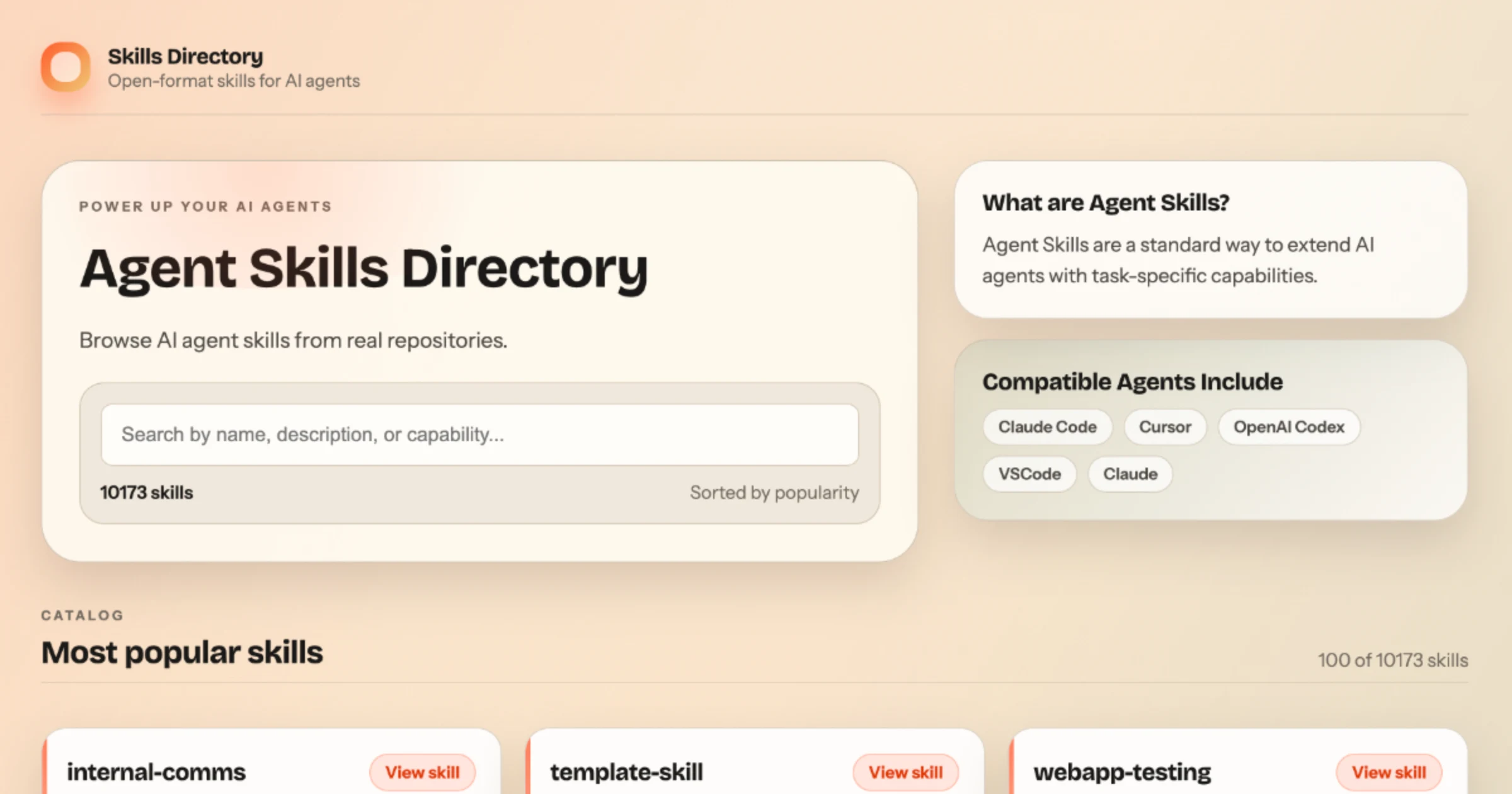
Agent Skills Directory was a searchable directory of AI agent skills designed to help users discover the most popular skills from real repositories. It served as a central hub for developers, AI enthusiasts, and product teams looking to find and get inspired by existing agent capabilities. The primary purpose was to streamline the process of identifying useful skills that could be integrated or adapted for various AI agent projects. By aggregating skills from actual codebases, it provided a practical, real-world reference point for anyone building or enhancing AI agents. The directory aimed to reduce duplication of effort and foster innovation by showcasing what others had successfully implemented.
The platform addressed a common pain point in the rapidly evolving AI agent ecosystem: the difficulty of discovering and evaluating available skills. Developers often spent significant time searching through disparate repositories or documentation to understand what functionalities were possible. This fragmented landscape made it challenging to find reliable, popular, or well-tested skills for integration. The directory sought to solve this by curating and organizing skills into a single, accessible location, saving users time and effort. It provided a solution to the problem of information overload and lack of centralized resources in the AI agent development community.
One major feature group was its searchable directory structure, which allowed users to efficiently browse and filter AI agent skills. Users could search based on keywords, categories, or popularity metrics to find relevant skills quickly. The directory compiled skills from real repositories, ensuring that the listings were grounded in actual implementations rather than theoretical concepts. This feature enabled users to see practical examples and understand how skills were being used in real projects. It provided transparency into the AI agent landscape, helping users make informed decisions about which skills to explore or adopt.
Another key feature was the focus on showcasing the most popular skills from real repositories, which provided a quality signal for users. By highlighting skills that were widely used or highly regarded, the directory helped users identify reliable and effective options. This popularity metric served as a form of community validation, indicating which skills had proven useful in practice. Users could leverage this information to prioritize their exploration and avoid less-tested or obscure skills. This feature added a layer of curation that enhanced the directory's value as a trusted resource for AI agent development.
admin
The directory also offered inspiration for skills that users might want to use themselves, acting as a creative catalyst for AI agent projects. By exposing a diverse range of capabilities, it encouraged users to think beyond their immediate needs and consider new possibilities. Users could discover novel skills they hadn't previously considered, sparking ideas for enhancing their own agents. This inspirational aspect helped drive innovation and experimentation within the AI community. It supported both beginners looking for starting points and experienced developers seeking advanced functionalities to incorporate.
The product worked by aggregating data from real AI agent skill repositories, processing it into a structured format, and presenting it through a web-based interface. It likely involved web scraping or API integrations to collect skill information from various sources, then organizing it into categories or tags. The directory would have been updated regularly to reflect new skills and changes in popularity. Users accessed the platform via its website, where they could search, browse, and view detailed information about each skill. This technical approach ensured the directory remained current and relevant to the fast-paced AI field.
Benefits for users included significant time savings in discovering AI agent skills, as they no longer needed to manually search multiple sources. The directory provided a centralized, curated view of the skill landscape, reducing the cognitive load associated with evaluating options. Users could quickly identify popular and reliable skills, leading to more efficient development cycles and higher-quality agent implementations. The platform also fostered learning and inspiration by exposing users to a wide array of capabilities they might not have encountered otherwise. These outcomes contributed to faster prototyping, better decision-making, and enhanced innovation in AI agent projects.
Concrete use cases included developers building new AI agents who needed to quickly find and integrate pre-existing skills to accelerate development. Product managers could use the directory to research available capabilities and plan feature sets for AI-powered products. Researchers might explore the directory to understand trends in AI agent functionality and identify gaps in the market. Educators could leverage it as a teaching resource to show students real-world examples of AI skills. In each workflow, users would visit the directory, search for relevant skills, review details, and then implement or adapt them for their specific needs.
Target users were primarily developers, AI engineers, and technical teams working on AI agent projects, as well as product managers and researchers in the AI space. The directory likely integrated with common development tools or platforms used in AI agent ecosystems, though specific integrations are not detailed. Its tech stack would have involved web technologies for the frontend interface and backend systems for data aggregation and processing. Pricing plans are not specified, but the platform was retired due to high operational costs, suggesting it may have been free or had limited monetization. It served a niche but growing audience interested in practical AI agent development.
In summary, Agent Skills Directory provided a valuable, centralized resource for discovering and getting inspired by AI agent skills from real repositories. It addressed the fragmentation in the AI ecosystem by curating popular skills into an accessible directory. Although now retired, it demonstrated the need for such tools in supporting the AI community's growth and innovation. The directory helped users save time, make informed decisions, and explore new possibilities in agent development. Its legacy highlights the ongoing demand for organized, practical resources in the fast-evolving field of artificial intelligence.
The target audience includes developers, AI engineers, and technical teams working on AI agent projects, as well as product managers and researchers in the AI space. These users seek practical resources to discover, evaluate, and get inspired by AI agent skills from real repositories. The directory caters to those looking to save time, reduce duplication of effort, and enhance their agent implementations with proven capabilities.
Updated 2026-02-28