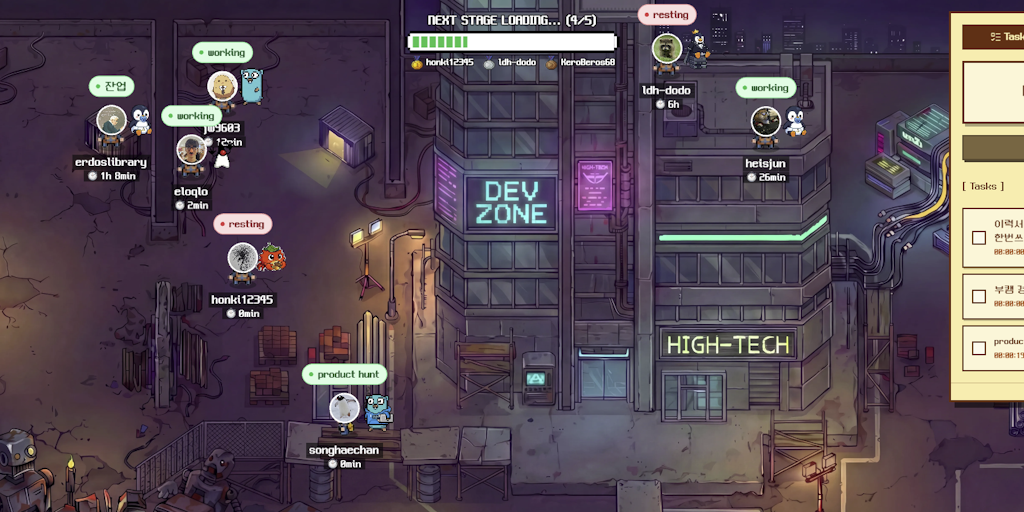
Commit Please is a GitHub study platform designed for developers who seek motivation and accountability during their coding sessions. By integrating directly with GitHub, it transforms solitary work into a shared, immersive experience where every commit, pull request, and issue creation contributes to a living virtual world. This platform is perfect for remote workers, open source contributors, and students who want to turn their daily coding grind into a collaborative adventure. The core value lies in making progress visible and social, reducing the feeling of isolation and providing a gentle push to stay focused. Without requiring a camera or microphone, it offers a low-barrier entry point for anyone already using GitHub.
Many developers struggle with maintaining focus and motivation, especially when working alone. The absence of a team or immediate feedback can lead to procrastination, burnout, or a lack of accountability. Commit Please addresses this pain point by turning abstract GitHub activity into tangible, shared progress. Instead of working in a vacuum, users see their contributions impacting a collective map and earning points that upgrade pets. This gamified approach leverages the habit loop: a developer does a commit, sees immediate visual effects, and feels a sense of accomplishment. The platform thus solves the common problem of drifting attention by providing constant, positive reinforcement tied directly to real work.
The first major feature group is GitHub Activity Integration, which detects pushes (commits), pull requests, and issue creation in real time. Each detected action automatically syncs with the platform and triggers character effects on the user’s pet and the shared map. This feature works by reading webhooks or API data from the connected GitHub account. The benefit is that developers receive instant gratification for their everyday coding tasks—without needing to manually log or report anything. It gamifies the ordinary and encourages more frequent contributions. The auto-sync ensures no action is missed, making the experience seamless and habit-forming.
Second is Personal Achievement Visualization, which includes a daily grass/calendar view similar to GitHub’s contribution graph but focused on the user's activity within the platform. Users can track how much they focused today, view daily records, and check task completion at a glance. Statistics and achievement displays provide a clear overview of productivity trends. This feature helps developers set micro-goals and see their progress over time. Unlike mere stats, the calendar becomes a motivational tool: filling the grass squares feels rewarding, and the achievement badges add extra layers of recognition. It turns passive data into an active driver for consistency.
admin
The third feature group is the Evolving Virtual Space and the pet evolution system. The space runs on 7-day seasons; when collective goals (defined by the community’s total activity) are met, the map expands and grows. Simultaneously, users earn points from any dev activity (commit, PR, review) and can use those points to evolve their pets up to three stages. The seasonal system introduces a rhythm—each week brings new objectives and a renewed focus. Map expansion visually represents collective achievement, fostering a sense of community progress. Pets evolve in stages, with a secret third stage that encourages sustained engagement and curiosity.
Overall, Commit Please works by syncing with the user’s GitHub account and tracking specific events in real time. As developers go about their normal workflow—coding, reviewing, or managing issues—the platform accumulates points and triggers visual updates. The shared map and pets serve as a communal progress bar that everyone contributes to simultaneously. No extra setup is required beyond connecting a GitHub account; the platform automatically detects activities and applies them to the appropriate metrics. This low-friction approach means users can focus on their actual work while the environment provides ambient motivation. The system encourages a healthy cycle of work and reward.
Concrete use cases include a solo open source contributor who wants to maintain momentum during long coding sessions; by seeing the map expand and their pet evolve, they feel part of a larger community even when working alone. A remote team can adopt Commit Please as a lighthearted competition tool: members race to earn the most points and evolve their pets, which boosts camaraderie and output. Bootcamp students use the platform to build coding habits—they commit daily to see their grass fill up and unlock achievements, turning study sessions into a game. In all scenarios, users report feeling more accountable and eager to code, with the shared space creating a virtual coworking environment that fights isolation.
Commit Please targets developers of all skill levels who use GitHub—from professionals working remotely to hobbyists contributing to open source. It is also ideal for coding bootcamps, online courses, and university programming classes that want to increase student engagement. The platform runs entirely in the browser and requires no additional software beyond a GitHub account. Pricing details are not explicitly provided, but the service appears to offer a free tier with optional upgrades. In summary, Commit Please transforms the isolated act of coding into a shared, visually rewarding experience. By leveraging the familiar GitHub ecosystem, it provides a unique study-with-me approach that boosts motivation, fosters community, and makes every commit count.
Commit Please is built for developers who use GitHub and seek motivation, focus, and community in their coding practice. It is especially suited for remote workers, freelancers, and open source contributors who often code in isolation. Bootcamp students and university programming courses can leverage the gamified environment to build consistent habits. Tech team leads may introduce it as a lighthearted engagement tool. The platform is accessible to any skill level—from beginners learning to code to seasoned professionals—as long as they have a GitHub account. It also appeals to those interested in virtual coworking or study-with-me environments but prefer a low-friction, audio-video-free experience. Overall, it targets anyone who wants to transform solitary GitHub activity into a shared, motivating journey.
Updated 2026-02-28