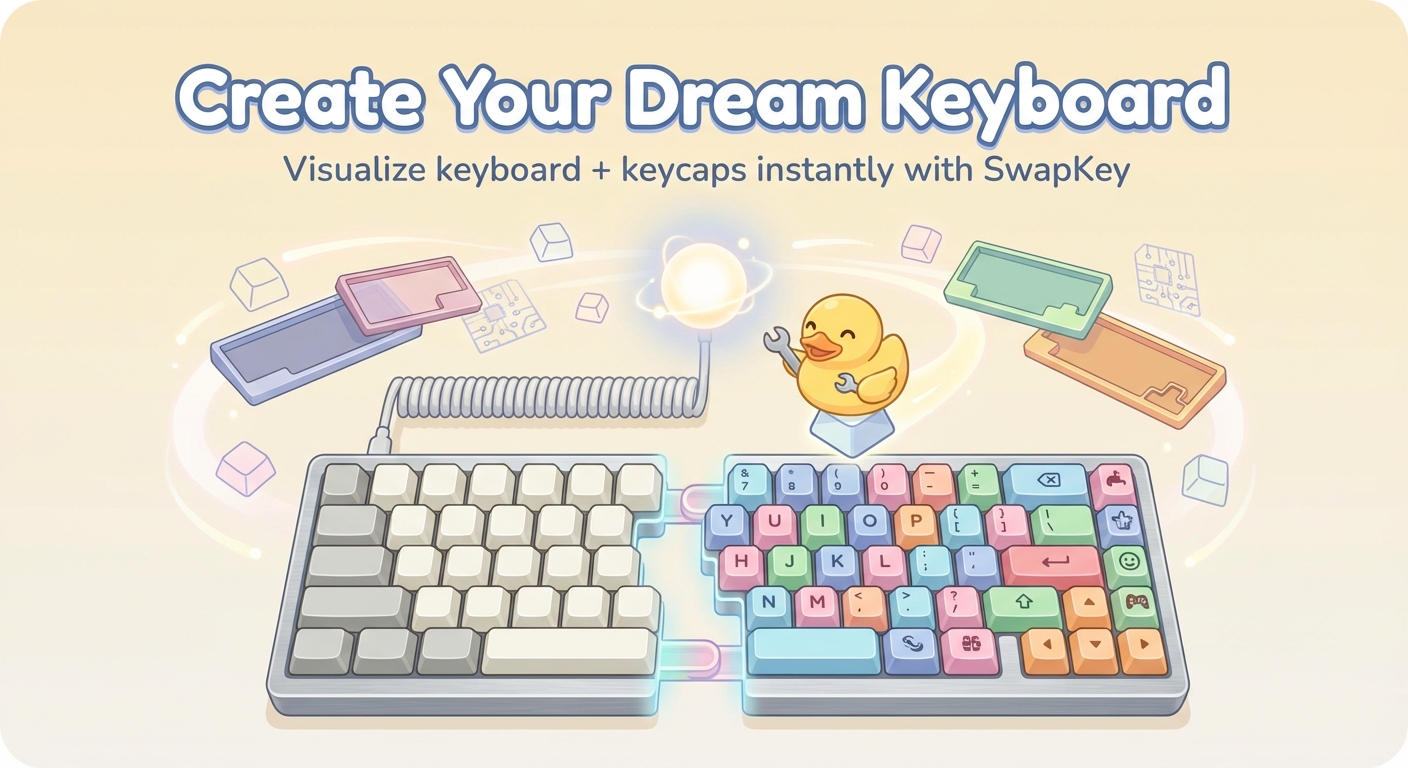
SwapKey is an AI-powered preview tool designed specifically for mechanical keyboard enthusiasts, enabling them to visualize their custom keyboard builds with different keycap sets before committing to a purchase. The core functionality revolves around uploading a photo of one's own keyboard and using artificial intelligence to generate realistic, high-quality renderings that show exactly how various keycap sets would look when physically installed. This tool is built for the passionate community of keyboard hobbyists who invest significant time and money into customizing their typing experience, providing a crucial visualization step that bridges the gap between online product images and the final assembled product. By offering a digital sandbox for experimentation, SwapKey empowers users to make more confident and informed buying decisions, reducing the uncertainty and financial risk associated with buying expensive keycap sets that may not match expectations.
Mechanical keyboard customization is a popular but complex hobby where enthusiasts often purchase keycaps, switches, and keyboards through limited-time group buys or from various online vendors. A significant pain point in this process is the inability to see how a specific set of keycaps will actually look on a user's particular keyboard model before buying. Product photos on vendor sites are often generic, shot on different keyboards, under varying lighting, and may not represent the final appearance on the user's own hardware. This leads to disappointment, wasted money, and a cluttered collection of keycaps that don't meet aesthetic goals. The hobby involves high-cost items and long wait times for group buy fulfillment, making a wrong choice particularly frustrating. SwapKey directly addresses this uncertainty by providing a realistic, AI-generated preview, solving the core problem of visualization before purchase.
The first major feature is the AI-powered rendering engine itself, which processes a user-uploaded photo of their keyboard. The technology works by intelligently identifying the keyboard's layout, case color, and existing keycaps within the image. It then digitally removes the current keycaps and seamlessly overlays the selected new keycap set, rendering a photorealistic image that accounts for lighting, shadows, texture, and perspective from the original photo. This matters because it transforms a flat, abstract product listing into a tangible preview of the final build. The AI handles complex details like different keycap profiles, legends, and colors, producing a result that is far more accurate than a simple Photoshop composite, giving users a trustworthy visualization to base their purchasing decisions on.
admin
The second major feature group is the integrated catalog and browsing system for both keyboards and keycaps. Users can explore a comprehensive, searchable database of keyboard models and keycap sets, complete with detailed specifications, images, and filtering options. This catalog allows users to discover new products, compare different options, and then directly launch the SwapKey wizard to visualize combinations. The ability to filter by layout, material, brand, keycap profile, and colorway streamlines the discovery process. This integrated ecosystem means users don't need to source images from disparate websites; they can find a keycap set in the catalog and immediately see it on their board, creating a seamless workflow from discovery to visualization.
Additional capabilities include tools for tracking the broader mechanical keyboard market, such as hubs for Interest Checks and Group Buys. These features allow users to stay informed about upcoming and active limited-time projects for keyboards, keycaps, and accessories. Users can see community interest levels, sentiment, pricing, and order windows, helping them plan their purchases. This transforms SwapKey from a simple visualization tool into a central hub for the entire keyboard hobby lifecycle. By combining visualization with market intelligence, the platform supports users in every stage, from initial inspiration and discovery through to the final decision and purchase of components for their custom build.
Overall, the product works through a straightforward three-step process: upload, AI process, and preview. A user starts by uploading a clear photo of their keyboard. The AI system then analyzes the image to understand its geometry and lighting. Finally, the user selects a keycap set from the catalog or uploads an image of one, and the AI generates a new composite image showing those keycaps on the uploaded keyboard. The technical approach leverages computer vision and machine learning models trained specifically on keyboard imagery to perform accurate segmentation and realistic texture application. The result is a fast, automated process that delivers a high-fidelity preview without requiring manual graphic design skills from the user.
The primary benefit for users is the elimination of guesswork and the associated financial risk when buying keycaps. Users gain confidence that the keycap set they are considering will match their keyboard's aesthetics before spending money, which can be substantial given the premium cost of many group buy sets. Measurable outcomes include reduced purchase regret, fewer unwanted keycap sets sitting unused, and a more satisfying customization process. Users can experiment with countless combinations digitally, fostering creativity and enabling them to perfect their ideal look without physical constraints. This leads to more personalized and satisfying end results for their keyboard builds.
Concrete use cases are abundant within the mechanical keyboard community. For example, a user who owns a black 65% keyboard can use SwapKey to see how a vibrant, pastel-colored keycap set would look before joining a 6-month group buy. Another user considering a new keyboard purchase can browse the keyboard catalog, find a model they like, and then visualize it with different keycap sets from the gallery to decide which board and cap combination to pursue. A hobbyist with multiple keyboards can upload photos of each and quickly test the same keycap set across all of them to decide where it fits best. These specific workflows save time, money, and prevent disappointment.
The target users are mechanical keyboard enthusiasts, custom builders, and collectors who participate in online communities and group buys. The platform integrates with the hobby's ecosystem by aggregating data on Interest Checks and Group Buys from community forums. While the specific tech stack is not detailed, the product is a web application accessible via browser. Pricing is indicated by a free tier ('Try SwapKey Free'), suggesting a freemium model, though specific plans are not enumerated. The tool is designed for users who are already engaged in the hobby and are looking for smarter tools to enhance their building and buying experience.
In summary, SwapKey's primary value is providing certainty and creative freedom in the often uncertain world of mechanical keyboard customization. By combining an AI visualization engine with a comprehensive product catalog and market tracker, it serves as an essential tool for any enthusiast looking to make informed, confident decisions about their next build. It transforms the purchasing process from a leap of faith into a calculated, visual design step, ultimately leading to greater satisfaction with the final, physical keyboard sitting on the user's desk.
Mechanical keyboard enthusiasts, custom builders, and collectors who actively participate in the hobby. This includes individuals who buy keycaps, switches, and keyboards through group buys and online vendors, and who seek to visualize how components will look together before purchasing. They are tech-savvy users engaged in online communities, interested in personalizing their typing experience, and value tools that reduce the financial risk and uncertainty associated with high-cost, limited-availability custom keyboard parts.
Updated 2026-02-28