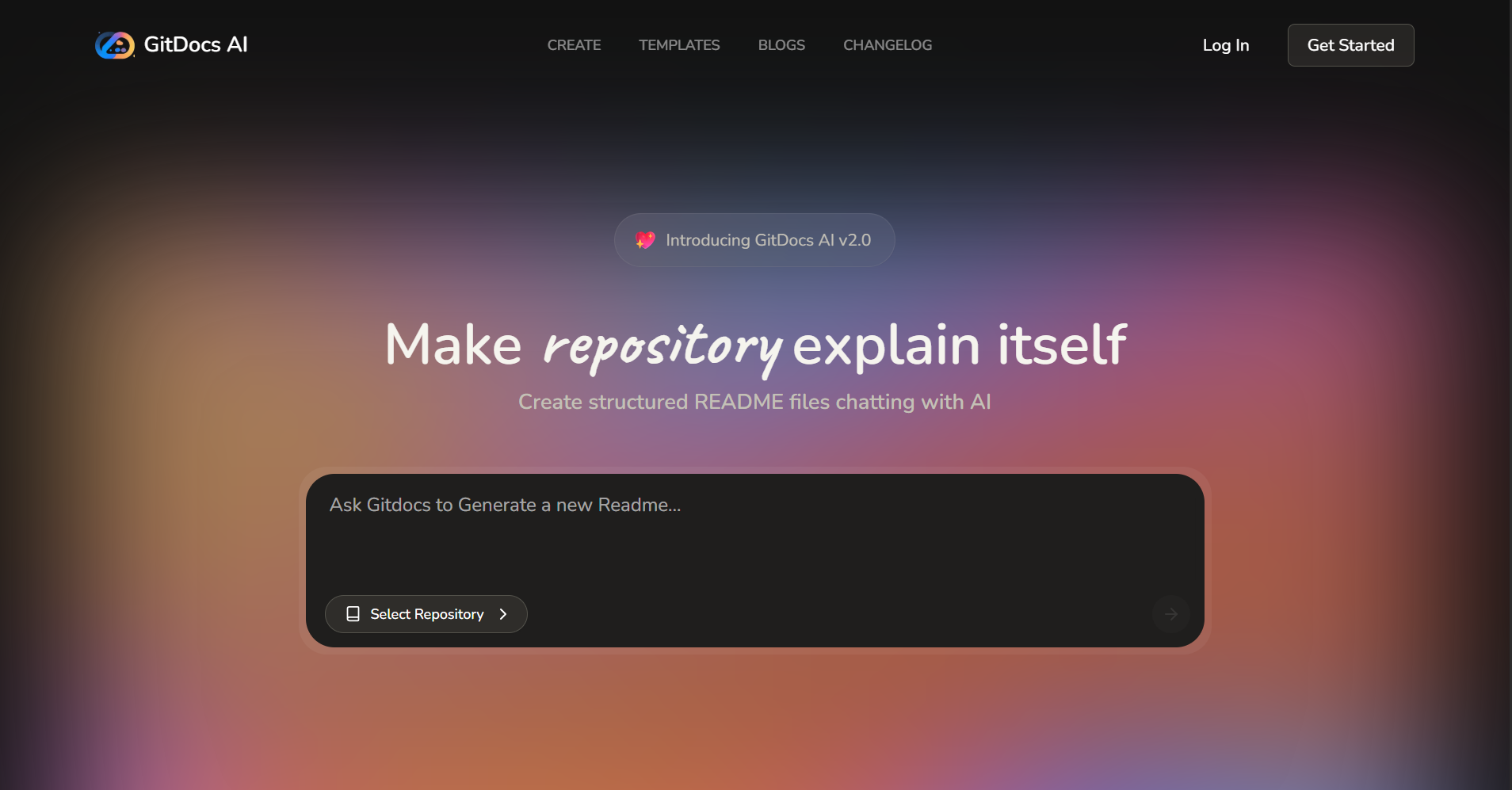
Gitdocs AI is an artificial intelligence-powered tool designed specifically for developers to automate the creation and maintenance of professional README documentation. It connects directly to GitHub repositories, analyzing code, commit history, and project structure to generate comprehensive, production-ready README files. The tool is built for software developers, open-source contributors, and development teams who need to maintain high-quality project documentation without investing excessive manual effort. Its primary purpose is to transform the often tedious and overlooked task of documentation into a seamless, automated process that enhances project clarity and adoption.
In the fast-paced world of software development, documentation is frequently deprioritized, leading to poorly explained projects that hinder collaboration and user adoption. Developers often face the repetitive burden of writing and updating README files, which can become outdated quickly as code evolves. This creates a significant pain point where valuable development time is consumed by documentation chores rather than core coding tasks. The lack of consistent, clear documentation can stall project onboarding, confuse contributors, and reduce the overall professionalism and usability of software projects shared on platforms like GitHub.
The first major feature group is the AI-powered README generation engine, which intelligently analyzes a connected GitHub repository to produce a structured document. It examines source code files, package managers, configuration files, and directory structures to understand the project's purpose, technologies used, and setup requirements. The AI then drafts sections such as installation instructions, usage examples, API references, and contribution guidelines, tailoring the content to the specific project context. This automation ensures that the generated documentation is technically accurate and contextually relevant, saving developers from manually drafting these standard sections.
Another core feature is the seamless GitHub integration, which allows Gitdocs AI to connect directly to a user's repositories with appropriate permissions. Once connected, the tool can pull real-time data about the project, including the latest commits, branch structures, and code changes. This integration enables the AI to maintain documentation that stays synchronized with the codebase, suggesting updates when significant changes are detected. The connection is secure and respects repository privacy settings, making it suitable for both public open-source projects and private enterprise repositories requiring controlled access.
admin
The tool also offers customization and maintenance capabilities, allowing developers to review, edit, and refine the AI-generated README before finalizing. Users can adjust tone, add project-specific details, or incorporate branding elements to ensure the documentation aligns with their standards. Furthermore, Gitdocs AI can monitor the repository for changes and propose documentation updates, helping keep the README current as the project evolves. This creates a sustainable documentation workflow where the initial generation is just the starting point for an ongoing, well-maintained documentation practice.
Gitdocs AI works by leveraging advanced language models trained on technical documentation and software project patterns. When a user connects a GitHub repository, the system performs a deep analysis of the codebase, extracting key information about dependencies, entry points, and project architecture. The AI then synthesizes this information into a coherent README structure, following best practices for open-source documentation. The technical approach combines natural language processing with software engineering heuristics to produce outputs that are both human-readable and technically precise.
The benefits for users are substantial, starting with significant time savings by automating a repetitive and time-consuming task. Developers can generate a professional README in minutes instead of hours, allowing them to focus on coding and innovation. The tool also improves documentation quality and consistency, ensuring that all projects meet a high standard of clarity and completeness. This leads to better project adoption, easier onboarding for new contributors, and enhanced professional presentation, which is crucial for open-source visibility and career portfolio development.
Concrete use cases include individual developers launching new open-source projects who need to quickly create an inviting and informative README to attract users and contributors. Development teams within organizations can use Gitdocs AI to standardize documentation across multiple repositories, ensuring every project has clear setup and usage instructions. Freelancers and contractors can efficiently document client projects for handoff, providing professional deliverables that include comprehensive documentation. Educators and students can also use it to properly document coding assignments and academic projects, learning documentation best practices through AI assistance.
The target users are primarily software developers, DevOps engineers, and technical leads who manage GitHub repositories. It also serves open-source maintainers, coding bootcamp participants, and tech educators who require consistent project documentation. The tool integrates directly with the GitHub platform, leveraging its API for secure repository access. While specific pricing plans are not detailed in the provided content, the product is positioned as a solution that offers clear value by saving time and improving documentation quality for technical users across various contexts.
In summary, Gitdocs AI addresses a critical gap in the developer workflow by automating the creation and maintenance of README documentation. It transforms documentation from a burdensome chore into an efficient, AI-enhanced process that elevates project quality and developer productivity. By connecting directly to GitHub and leveraging artificial intelligence, it ensures that documentation keeps pace with code development, fostering better project understanding and collaboration.
The primary target audience is software developers, DevOps engineers, and technical leads who manage GitHub repositories and need to maintain project documentation. It also serves open-source maintainers, coding bootcamp participants, tech educators, and anyone involved in software development who requires efficient, high-quality README creation and maintenance.
Updated 2026-02-28