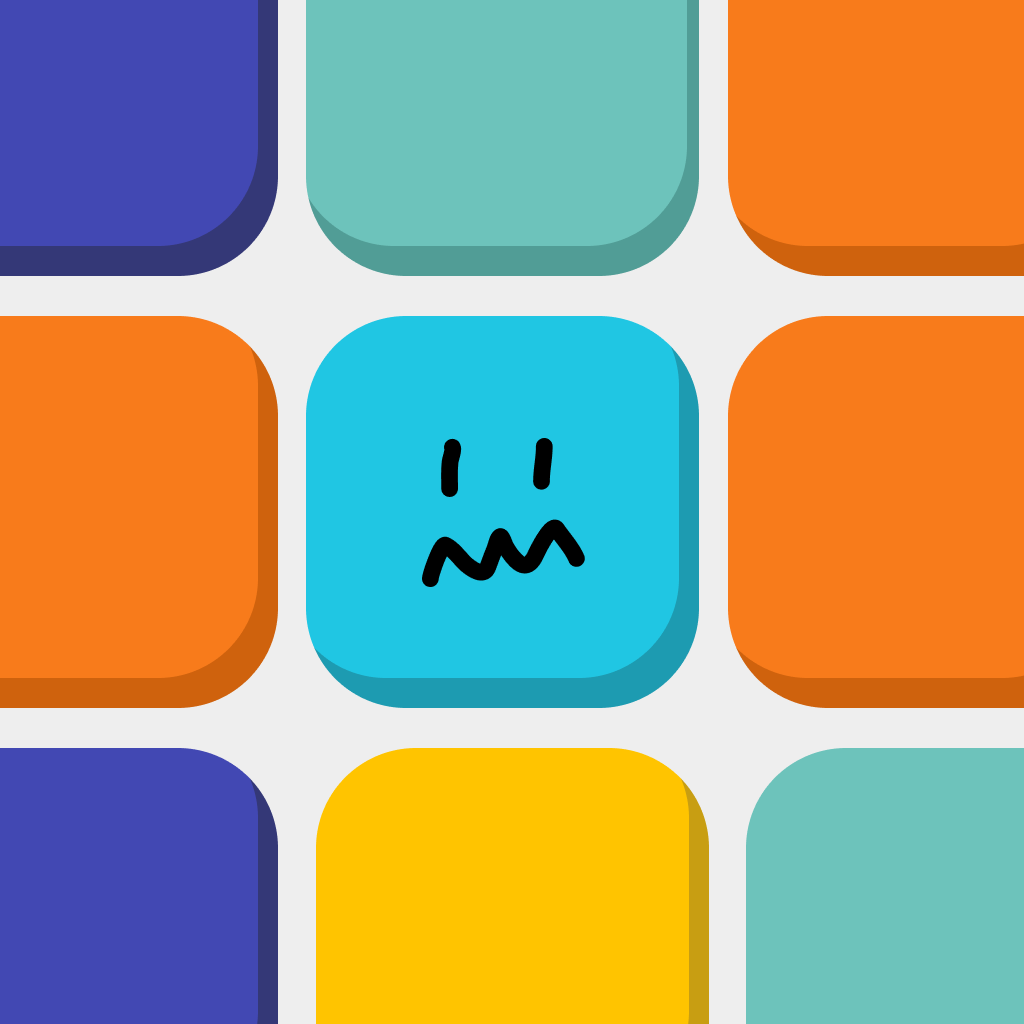
Huefold Game is a minimalist color strategy puzzle meticulously crafted to engage the mind and promote a state of focused flow. The product is designed for individuals seeking a mentally stimulating yet calming digital experience, where the primary objective is to achieve chromatic unity across a grid. Players are tasked with the mission of repainting neighboring blocks through strategic selections, working within a constrained number of moves to transform the entire puzzle into a single, harmonious color. This core loop of observation, planning, and execution forms the essence of the game, offering a clean digital alternative to traditional puzzles. The optional integration of time pressure adds a layer of intensity for those desiring a more dynamic challenge, making it versatile for different moods and play styles.
The game directly addresses the common modern desire for digital activities that are engaging without being overwhelming or laden with complex mechanics. Many available games feature intricate stories, aggressive monetization, or fast-paced action that can lead to cognitive fatigue rather than relaxation. Huefold identifies and solves the pain point of finding a satisfying mental workout within a serene and aesthetically pure environment. It provides a space for focused problem-solving where the rules are simple to grasp but the strategic depth requires genuine thought, filling a niche for thoughtful, pattern-based entertainment. The puzzle format leverages universal concepts of color and adjacency, removing barriers to entry while presenting a progressively challenging experience that holds attention.
A foundational feature group is the core repainting mechanic, which governs how players interact with the puzzle grid. The game presents a grid composed of multiple colored blocks, and the player selects a block to change its color, which subsequently affects all directly adjacent neighboring blocks of that original color, repainting them to the new chosen hue. This chain reaction mechanic is central to the strategy, as a single move can alter a significant portion of the board state, requiring foresight to manage the limited move count effectively. The elegance of this system lies in its simplicity on the surface paired with the emergent complexity of planning several moves ahead, as each decision irrevocably changes the landscape of possibilities. This creates a deeply engaging cognitive process where players must visualize potential board states and color dominances to find the most efficient path to a monochromatic solution.
admin
The strategic layer is profoundly defined by the constraint of limited moves, which is a second major feature group shaping the entire experience. Each puzzle level presents a maximum number of moves allowed to achieve the goal of a single-color grid, forcing players to optimize their repainting strategy rather than experimenting freely. This limitation elevates the game from a simple color-matching activity to a genuine puzzle requiring efficiency and precision. Players must analyze the initial color distribution, identify key color clusters that can serve as catalysts for large-scale changes, and sequence their moves to create cascading repaints that maximize coverage per action. The move limit ensures every decision carries weight and consequence, making successful completion a rewarding testament to careful planning and strategic insight.
Additional capabilities are introduced through the optional time pressure mode, which provides a distinct way to engage with the same fundamental puzzle mechanics. When enabled, this feature adds a countdown timer, compelling players to make their strategic color selections under a sense of urgency, which tests quick thinking and pattern recognition under stress. This mode caters to users who enjoy a more dynamic, arcade-like challenge alongside the contemplative standard play, effectively doubling the game's appeal. Furthermore, the minimalist aesthetic is not merely visual but functional, with a clean interface that eliminates all distractions, ensuring the player's cognitive resources are dedicated entirely to the color strategy. The combination of these elements—core repainting, move limits, and optional timers—creates a versatile puzzle framework that can be both a meditative exercise and a brisk test of skill.
The product works overall through a technical approach that prioritizes clarity, responsiveness, and intuitive interaction. The game engine generates puzzle grids with varying initial color distributions and difficulty levels, calculated to be solvable within the given move constraints to ensure fairness. The repainting algorithm instantly processes the player's selection, identifying all connected blocks of the chosen starting color via adjacency checks and updating their visual state and logical color value in a single, smooth operation. This immediate feedback is crucial for maintaining the flow state, as players can instantly see the consequences of their actions and adjust their subsequent plans. The user interface is designed with large, clear touch targets or click areas, making the interaction seamless on both mobile and desktop platforms, while the color palette is chosen for clarity and visual comfort during extended play sessions.
Benefits and measurable outcomes for users include significant improvements in focused attention, strategic planning skills, and a genuine sense of calm achievement. By engaging with the game's systems, players exercise their spatial reasoning and problem-solving abilities in a low-stakes environment, which can translate to enhanced cognitive flexibility in daily tasks. The structured challenge with clear win conditions provides a concrete sense of accomplishment upon solving a puzzle, releasing dopamine in a healthy, goal-oriented manner. The minimalist design reduces sensory overload, making it an effective tool for mental decompression and a brief digital detox from more chaotic applications. Regular play can help build patience and systematic thinking, as players learn to break down complex color patterns into manageable sequences of strategic moves.
Concrete use cases illustrate its integration into daily routines: a professional might play a few rounds during a short break to mentally reset before tackling a complex work problem, using the focused state it induces. A student could use it as a reward between study sessions, engaging a different part of the brain with a satisfying, completable task. For commuters, it serves as an absorbing yet non-stressful way to pass time on a train, requiring enough thought to be engaging but not so much that it's exhausting. In therapeutic or mindfulness contexts, the repetitive, pattern-based action combined with the clear goal can serve as a form of digital fidgeting to alleviate anxiety by directing restless mental energy into a structured, solvable channel. Each session, whether five minutes or thirty, offers a self-contained strategic journey with a clear beginning and end.
The target users are broad but share a common thread: individuals looking for intelligent, stylish, and satisfying puzzle games without intrusive ads or complex lore. This includes puzzle enthusiasts, fans of minimalist design, people seeking focus aids or mindfulness tools, and casual gamers wanting a thoughtful break. The game is designed for seamless integration into daily life on iOS platforms, as indicated by its presence on the App Store. While the specific tech stack is not detailed, its availability on a major mobile platform suggests development using standard modern game engines or frameworks suitable for smooth 2D graphics and touch interactions. Pricing plans are not explicitly stated in the provided content, so that information cannot be included, but the product's presentation suggests a focus on a premium, ad-free experience.
In summary, Huefold Game delivers a refined and intellectually satisfying puzzle experience by mastering the interplay of simple rules and deep strategy. Its primary value lies in providing a digital space for focused flow, where the act of unifying color through careful planning becomes a rewarding exercise in clarity and efficiency. The game stands out by offering substantial cognitive engagement wrapped in a serene, minimalist package, making it a compelling choice for anyone seeking meaningful and calming screen time.
The target audience includes puzzle enthusiasts, fans of minimalist and elegant game design, individuals seeking tools for focus or mindfulness, and casual gamers looking for a thoughtful, engaging break. It appeals to those who enjoy strategic planning, pattern recognition, and satisfying problem-solving without complex narratives or intrusive monetization. Users range from professionals wanting a mental reset to students needing a study break, all united by a desire for intelligent, calming digital entertainment that promotes flow states.