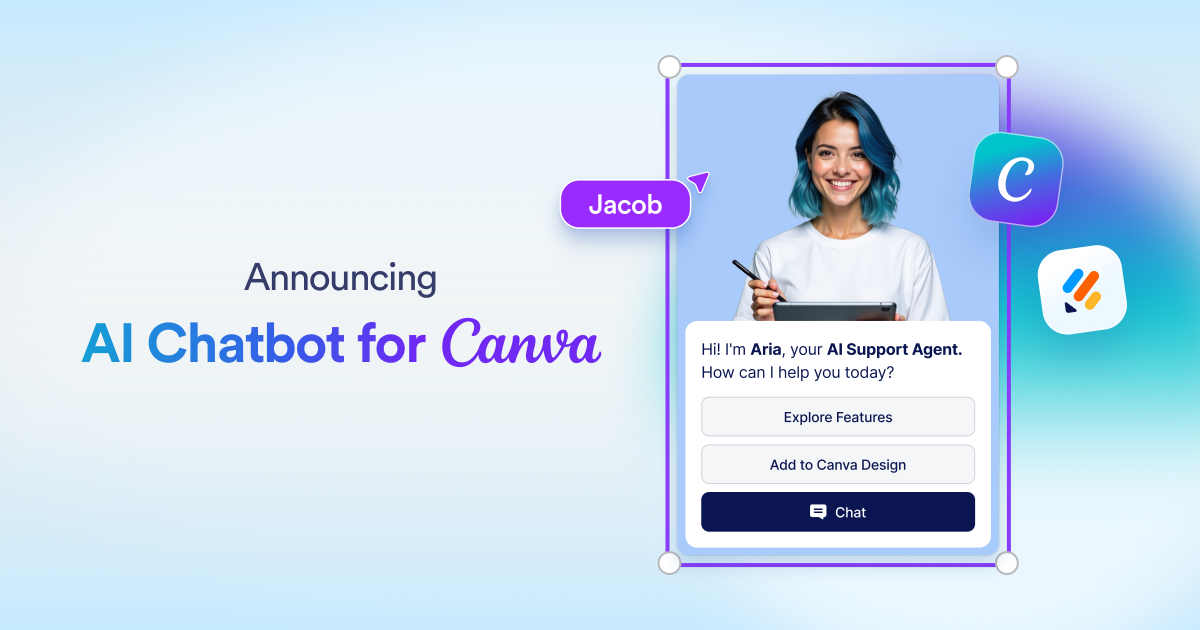
Jotform AI Chatbot for Canva is a specialized integration that embeds intelligent, conversational interfaces directly into Canva design projects, turning static visual content into dynamic, interactive experiences. This product is designed for creators, marketers, educators, and business owners who use Canva to produce graphics, presentations, websites, or social media content and wish to add a layer of real-time engagement without leaving the design environment. Its main purpose is to bridge the gap between visual communication and audience interaction by allowing any Canva design to host a chatbot that can answer questions, collect information, or guide users, thereby making designs functionally alive and responsive to viewer input.
Traditionally, creating interactive elements for digital designs required separate development work, coding knowledge, and complex integration between design platforms and chatbot builders. This created a significant barrier for non-technical users who dominate platforms like Canva, forcing them to either settle for passive, one-way communication or invest in external developer resources. The pain point is particularly acute for small businesses, solo entrepreneurs, and educators who rely on Canva for its simplicity and speed but need more sophisticated tools to capture leads, provide instant support, or create engaging learning materials directly from their visual assets.
The first major feature group is the seamless embedding of an AI-powered chatbot directly into Canva designs. This works by connecting a Jotform account to Canva, allowing users to select a chatbot they have built or create a new one, and then placing it as an interactive element within their Canva project. The chatbot becomes a native part of the design, whether it's a website, presentation slide, social media graphic, or digital flyer. Why this matters is it eliminates the need for external links or redirects; the conversation happens in context, keeping the user engaged with the design itself. This direct integration preserves the visual flow and user experience, making interaction intuitive and immediate.
The second major feature group centers on the chatbot's AI-driven, instant response capabilities. The chatbot can be trained or configured to answer frequently asked questions about the design's content, the creator's services, event details, or product information. It works by analyzing the visitor's text input and providing relevant, pre-programmed or AI-generated answers in real time. This matters because it automates customer service and information dissemination, allowing creators to be available 24/7 without manual intervention. It transforms a static piece of content into a two-way communication channel that can qualify leads, book appointments, or provide support the moment a viewer shows interest.
admin
Additional capabilities include the ability to collect data and integrate with workflows without coding. When a visitor interacts with the chatbot, it can be configured to gather information like email addresses, feedback, or survey responses directly within the conversation. This collected data can then be sent automatically to various business applications through Jotform's extensive integration ecosystem. This extends the functionality from mere Q&A to active data collection and process automation, turning a simple design view into a potent lead generation or feedback collection tool that feeds directly into CRM systems, email lists, or project management boards.
The product works overall by leveraging Jotform's established form and automation platform and connecting it to Canva's design interface via an integration or app. Users build or select a chatbot in Jotform, which utilizes AI models for natural language understanding. They then use the Jotform integration within Canva to embed this chatbot widget into their design. The technical approach is low-code, focusing on configuration over programming, making advanced interactive functionality accessible through a visual, drag-and-drop or selection-based process familiar to Canva users. The chatbot operates on the published design, hosted and powered by Jotform's infrastructure.
Benefits and measurable outcomes for users include significantly increased engagement rates on their designs, as interactive elements keep visitors on the page longer. Users can capture more qualified leads by initiating conversations at the point of interest, leading to higher conversion rates. It reduces the workload on creators by automating initial customer inquiries and information gathering, saving time and resources. The seamless integration means no technical hurdles, allowing for faster deployment of interactive content and a professional appearance that enhances brand perception and user experience.
Concrete use cases include a real estate agent embedding a chatbot in a Canva-designed property listing flyer to answer immediate questions about square footage, pricing, and viewing schedules. An online course creator can add a chatbot to their course promotion graphic on social media to enroll students and answer syllabus questions automatically. A small business can place a chatbot on a Canva-created service menu PDF to let customers inquire about pricing or book consultations directly. A nonprofit can use it on a digital donation campaign poster to explain impact and collect donor information interactively.
Target users are primarily non-technical Canva users such as small business owners, marketers, solopreneurs, educators, coaches, consultants, and nonprofit organizers. The product integrates directly with the Canva platform and leverages Jotform's backend for chatbot logic and data handling. It connects with Jotform's 150+ integrations for apps like email marketing services, CRMs, and payment processors. While specific pricing plans are not detailed in the content, Jotform typically offers a free tier and paid plans, suggesting this chatbot feature would be part of that ecosystem, accessible to users based on their Jotform subscription level.
In summary, Jotform AI Chatbot for Canva fundamentally enhances the utility of visual content by making it conversational and actionable. It solves the critical problem of passive audience engagement by providing a simple, code-free tool to add intelligent interaction directly where the audience's attention already is—on the design itself. The primary value is empowering every Canva user to build not just visually appealing content, but smart, functional touchpoints that drive real business and communication outcomes through automated, AI-powered dialogue.
The primary target audience is non-technical Canva users who need to add interactive functionality to their designs without coding. This includes small business owners, marketers, solopreneurs, educators, coaches, consultants, nonprofit organizers, and content creators. These users rely on Canva for its simplicity in creating professional visuals but lack the developer resources to build custom interactive elements. They seek to enhance engagement, automate initial customer inquiries, capture leads, and collect data directly from their visual content to drive business outcomes and improve communication efficiency.
Updated 2026-02-28