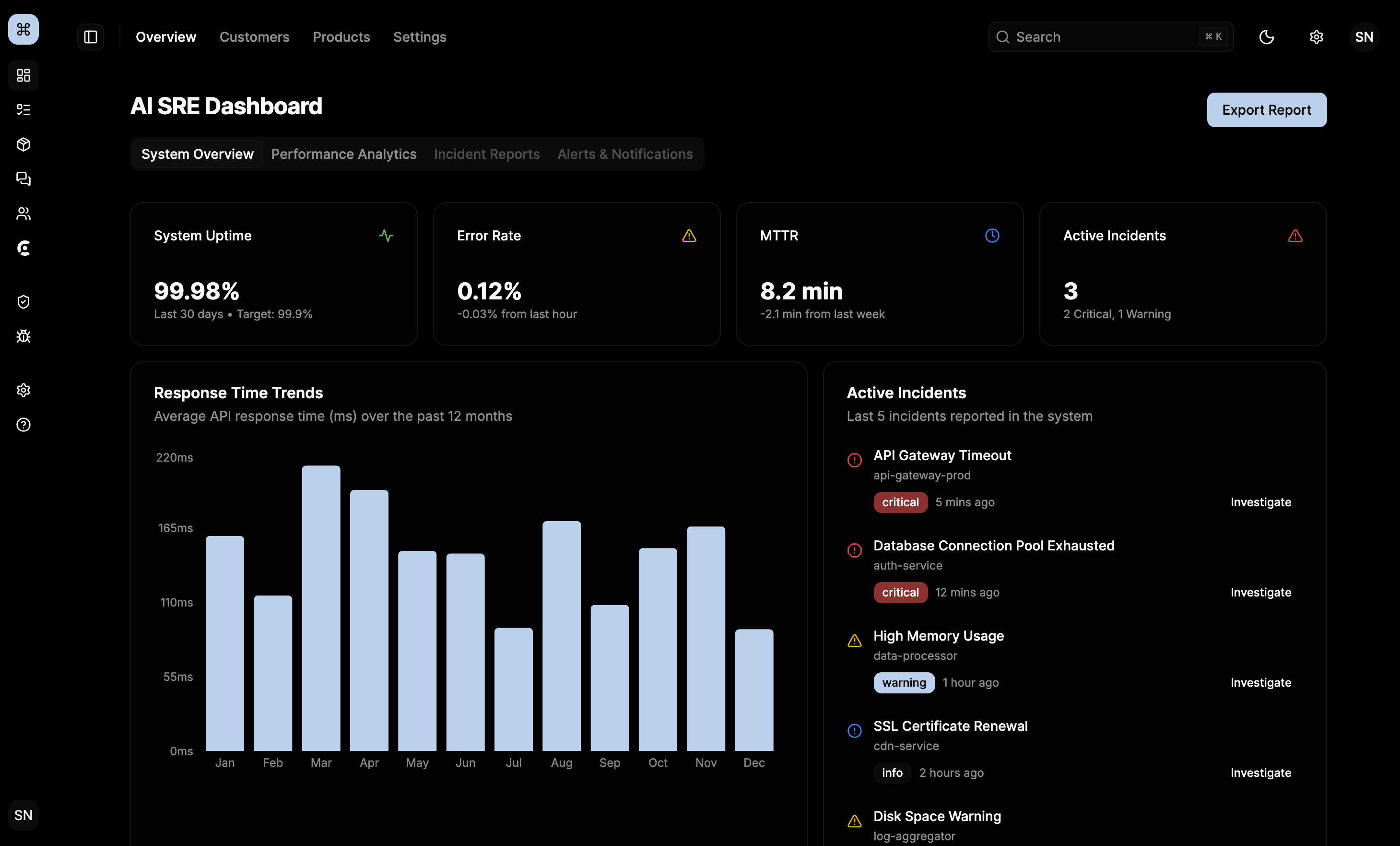
Scoutflo is an AI SRE platform that revolutionizes how engineering teams handle incident response and debugging for cloud-native applications. Designed for fast-moving teams and site reliability engineers, it automates the entire alert-to-resolution lifecycle, from detection to root cause analysis and remediation. The platform's primary value is its ability to slash mean time to resolution (MTTR) dramatically, reduce alert fatigue, and automate safe fixes with guardrails and approvals. By putting reliability on autopilot, Scoutflo frees engineers from tedious manual tasks, allowing them to focus on innovation rather than firefighting. With a simple connection process and deep integrations with Kubernetes, AWS, Grafana, and more, it fits seamlessly into existing infrastructure, providing immediate value. Scoutflo's Kepler engine learns from every incident, continuously improving its accuracy and ensuring that response times drop over time.
The concrete problem Scoutflo solves is the chronic pain of on-call fatigue and slow incident response that plagues engineering organizations. When alerts flood in from multiple monitoring tools like Prometheus, Grafana, Datadog, and Sentry, engineers spend hours manually sifting through logs, metrics, and traces to identify root causes. This manual process is error-prone, delays resolution, and leads to burnout. Scoutflo eliminates this by automatically triaging alerts, correlating signals across the entire infrastructure, and delivering evidence-backed root causes within minutes. For cloud-native environments, where issues like OOMKilled pods or misconfigured request limits are common, the platform provides immediate clarity and actionable fix steps. This matters because every minute of downtime costs revenue and trust; reducing MTTR directly improves service level objectives and team morale.
The first major feature group is Automated Root Cause Analysis (RCA). Scoutflo offers single-click investigation across logs, metrics, and traces, performing multi-layer correlation from services down to Kubernetes events. It uses architecture-aware analysis to understand dependencies between components, ensuring that the identified root cause is not just a symptom but the underlying issue. For example, when an OOMKilled alert triggers on the payment-gateway pod, Scoutflo automatically starts triage, debugging Kubernetes logs and metrics, and within minutes presents evidence-backed root causes along with concrete fix steps. This feature is useful because it eliminates the need for engineers to manually chase data across different tools, reducing the average time to diagnosis from hours to minutes. With a reported RCA accuracy of 94%, teams can trust the results and act quickly. The RCA output includes confidence scoring, so engineers know how reliable the result is, and it integrates directly with Slack for seamless collaboration.
admin
The second major feature group is AI-Powered Anomaly Detection and Intelligent Signal Correlation. Scoutflo uses its Kepler engine to predict issues before they impact users by continuously analyzing infrastructure patterns and identifying anomalies. This proactive approach is complemented by intelligent correlation that connects signals across monitoring, logs, and infrastructure for complete context. Instead of receiving isolated alerts, teams see a unified view of the incident, including dependencies and potential cascading effects. For instance, a memory spike in one service might be correlated with a configuration change in another, giving engineers a full picture. This feature reduces alert fatigue by triaging what matters and focusing on critical issues that need attention. It also provides visibility for leaders through real-time insights into reliability, costs, and risk across the infrastructure.
The third feature group involves Automated Remediation and Playbooks. Once Scoutflo identifies a root cause, it can execute fixes with confidence, supported by guardrails and approvals that ensure safe automation without risk. The platform offers automated playbook execution, which allows teams to define standard operating procedures that run automatically in response to specific incidents. Additionally, Scoutflo boasts a knowledge preservation engine that learns from every incident, updating its AI memory to improve future responses. After resolution, it auto-generates comprehensive postmortems, saving engineers hours of documentation work while maintaining high-quality RCAs. This end-to-end automation—from detection to remediation to documentation—closes the loop, ensuring continuous improvement. Testimonials highlight that automated playbook execution is a game-changer, enabling teams to catch and fix issues before they become incidents. The Kepler engine acts like a senior SRE available 24/7, providing consistent and reliable incident response.
How the product works overall: Scoutflo follows a four-step workflow from connection to resolution. First, connect your entire infrastructure in minutes by integrating with Kubernetes, Terraform/Git, CI/CD pipelines, and monitoring tools like Grafana, Datadog, Prometheus, Sentry, and Slack. Second, the AI detects and diagnoses incidents using a confidence-scoring mechanism that ranks root causes by probability. Third, it remediates by executing automated fixes through playbooks, with guardrails to prevent unintended side effects. Fourth, it learns by auto-documenting every action taken, updating the AI memory so that similar incidents are resolved even faster in the future. This approach ensures that the system improves over time, reducing MTTR with each incident. The platform is designed for continuous operation, handling alerts 24/7 without human intervention, making reliability truly on autopilot.
Concrete use cases and outcomes: Engineering teams using Scoutflo have achieved dramatic improvements in incident response. For example, Flexprice reduced MTTR by 40% and made on-call nearly boring, as the AI handles all the heavy lifting. Petavue uses automated playbook execution to catch and fix issues before they become incidents, shifting from reactive to proactive reliability. CodeAnt AI saw incident response time drop by 60%, attributing the improvement to Scoutflo's Kepler engine which acts like a senior SRE available 24/7. Docket AI benefited from auto-generated postmortems that save hours of documentation work while ensuring quality RCA documentation. These outcomes stem from the platform's ability to triage alerts, provide accurate root causes, and automate resolution with guardrails. Teams also gain visibility into reliability, costs, and risk through real-time dashboards, enabling better decision-making. Overall, Scoutflo transforms the SRE experience from constant firefighting to strategic reliability management.
Target users are fast-moving engineering teams, SREs, and DevOps practitioners who manage complex cloud-native infrastructures on Kubernetes, AWS, and other platforms. The platform integrates with over fifteen tools including Prometheus, Grafana, Datadog, Sentry, Terraform, GitHub, Slack, Jira, and cloud providers like Google Cloud and Azure. Scoutflo offers a free trial with no credit card required, allowing teams to evaluate its capabilities risk-free. Pricing details are not explicitly listed, but the product is positioned as a premium SRE automation tool for startups and enterprises alike. The summary takeaway: Scoutflo is the AI SRE platform that puts reliability on autopilot, reducing MTTR, eliminating alert fatigue, and enabling engineers to focus on building rather than firefighting. With a 94% RCA accuracy and 24/7 automated response, it is a comprehensive solution for modern incident management. Teams that adopt Scoutflo report not only faster resolution times but also improved team morale and reduced burnout.
Fast-moving engineering teams, SREs, DevOps engineers, and cloud-native developers who manage complex infrastructures on Kubernetes, AWS, and other cloud platforms. Startups and enterprises looking to reduce on-call fatigue, accelerate incident response, and maintain high reliability without expanding headcount. Teams using monitoring tools like Grafana, Prometheus, Datadog, Sentry, and collaboration tools like Slack and Jira.
Updated 2026-02-28