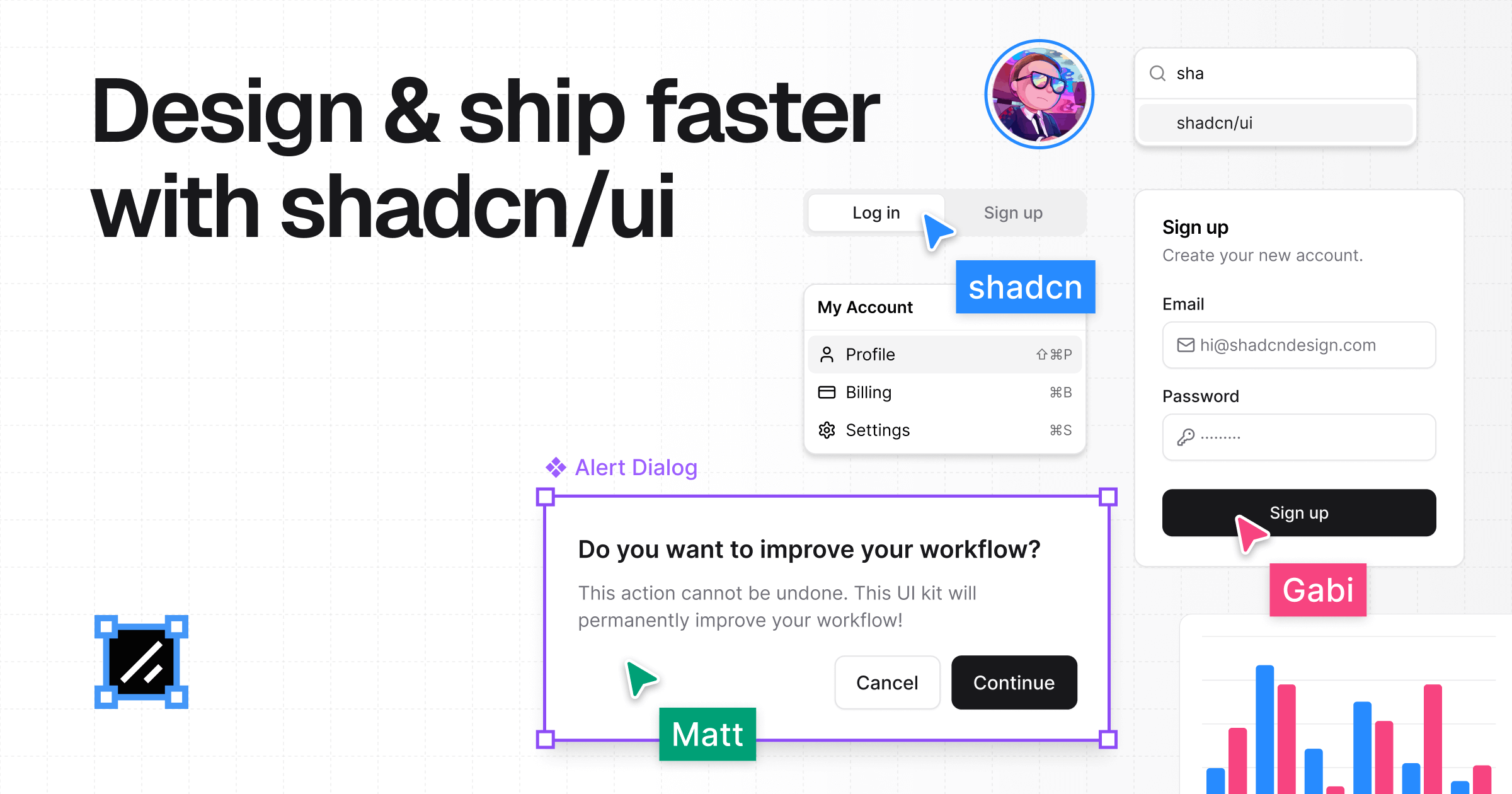
The shadcn/ui ecosystem is a comprehensive collection of Figma and React resources designed to help designers, developers, and teams deliver shadcn/ui projects with maximum efficiency. It serves as the complete toolkit that bridges the gap between design and development, offering pixel-perfect components, ready-to-use blocks, AI integration capabilities, and educational materials. This ecosystem is specifically built for professionals who utilize the shadcn/ui component library and seek to accelerate their workflow from initial design concepts to production-ready code. Its primary purpose is to eliminate the friction and manual translation typically required when moving designs from Figma into functional React components, ensuring consistency, accuracy, and speed throughout the entire product development lifecycle.
Before this ecosystem existed, professionals faced significant challenges finding quality shadcn/ui resources for Figma. Available options were often outdated, poorly crafted, or completely abandoned, forcing teams to build everything from scratch or deal with mismatched components. This created a major pain point where designers and developers worked in silos, leading to design-to-code mismatches, wasted time on manual implementation, and inconsistent user interfaces. The founder, after seven years of building Figma resources for top teams and maintaining the Ant Design System, identified this exact gap in the market. The problem was the lack of a maintained, high-fidelity design system that perfectly mirrored the shadcn/ui codebase, causing inefficiencies and frustration for creators trying to leverage this popular React library.
The first major feature group is the pixel-perfect Figma kit, which forms the core of the design experience. This kit includes components that perfectly mirror shadcn/ui code, ensuring accurate Tailwind CSS alignment between design and development. Every component is built with auto-layout and variants, and it utilizes Tailwind CSS variables to maintain perfect visual consistency. The kit is described as AI-ready, meaning its structure is optimized for modern AI design and development tools. It also includes essential icons and assets, and it allows for full customization to match any brand's rules and identity. Crucially, the entire system is always kept up to date, so users never have to worry about working with outdated components or styles that no longer match the latest shadcn/ui releases.
The second major feature group is the Pro Blocks system, which provides ready-to-use blocks available as both Figma components and production-ready shadcn/ui code. These blocks cover a wide range of common UI sections, eliminating the need to build layouts from scratch. Categories include Landing Page sections, Application UI elements, and E-commerce components. Specific examples include 404 Sections, Banners, Bento Grids, Blog Sections, CTA Sections, Comparison Sections, Contact Sections, FAQ Sections, Feature Sections, Footers, Gallery Sections, Header Sections, Hero Sections, Pricing Sections, and Testimonials Sections. Each block is designed to be instantly usable, saving significant time in both the design and development phases by providing pre-built, high-quality solutions for standard interface requirements.
admin
Additional capabilities include Agent Skills, which are curated skill files that teach AI agents like Claude, Cursor, and Codex how to turn Figma designs into clean shadcn/ui components and sync design tokens. This feature allows users to point their AI agent at any Figma frame and receive a production-ready React component automatically. The agent maps to existing shadcn/ui components, installs missing ones, and downloads necessary assets, eliminating manual wiring work. Furthermore, the ecosystem includes a dedicated Figma to shadcn/ui plugin that converts Figma designs directly into clean, production-ready code. This plugin can generate components, export and import styles, create new styles, and install Pro Blocks, saving days of development time and preventing design-to-code mismatches.
The product works overall by creating a seamless bridge between the design environment in Figma and the development environment using shadcn/ui and React. The technical approach centers on maintaining a one-to-one correspondence between design components in the Figma kit and their code counterparts. It leverages Tailwind CSS variables for styling consistency, auto-layout in Figma for responsive design fidelity, and structured component variants that translate directly to React component props. The AI Agent Skills and Figma plugin automate the translation process, parsing Figma's design tokens and layer structures to generate appropriate JSX code with correct shadcn/ui component imports and Tailwind class applications, ensuring the output is ready for immediate use in a development project.
Key benefits and measurable outcomes for users include the ability to design and ship shadcn/ui projects significantly faster, as touted by the product's headline. Teams can eliminate the friction between design and development, reducing the time spent on manual implementation and corrections. Designers can ship pixel-perfect designs that developers can actually build without reinterpretation, while developers receive production-ready code that matches the designs exactly. The ecosystem is trusted by over 7,500 creators and teams, and it is endorsed by the creator of shadcn/ui himself, who called it the ultimate Figma kit. Users also benefit from continuous updates and direct support from the founder, ensuring the resources remain current with the evolving shadcn/ui library.
Concrete use cases include a designer creating a landing page using the Pro Blocks like Hero Sections, Feature Sections, and Pricing Sections in Figma, then using the plugin to generate the corresponding shadcn/ui React code for the development team. Another workflow involves a developer using the Agent Skills with an AI tool like Cursor to point at a complex application UI frame in Figma and automatically receive a fully coded React component with proper shadcn/ui imports and asset handling. A team manager onboarding new hires can leverage the Academy and comprehensive documentation to make them self-sufficient quickly, reducing the need for senior developers to answer repetitive questions about the design system and implementation patterns.
The target users are explicitly stated as designers, developers, managers, and teams working with shadcn/ui. It is for professionals and teams who want to eliminate workflow friction and accelerate project delivery. Integrations are deeply connected with Figma for design and shadcn/ui with React/Next.js for development. The tech stack inherently involves Tailwind CSS for styling. The product is offered through a one-time payment lifetime access model, as indicated by the pricing call-to-action, and it includes a 14-day refund policy. The ecosystem is positioned as a complete solution, replacing the need to search for disparate, often low-quality, resources across the internet.
In summary, the primary value of this shadcn/ui ecosystem is its role as the definitive, all-in-one resource for anyone building interfaces with shadcn/ui. It solves the critical problem of design-development handoff by providing tools that ensure pixel-perfect accuracy, offer massive time savings through pre-built blocks and automation, and are maintained by an expert with a proven track record. By joining the over 7,000 professionals already using it, teams can standardize their workflow, improve collaboration, and significantly reduce the time from concept to shipped product, all while ensuring their work aligns perfectly with one of the most popular modern UI libraries.
The product is for designers, developers, managers, and teams who use shadcn/ui and want to accelerate their workflow. It targets professionals seeking to eliminate friction between design in Figma and development with React. Specifically, it serves creators and teams, currently over 7,500, who need pixel-perfect design resources, production-ready code blocks, AI integration for automation, and educational materials to design and ship projects faster. It is ideal for those frustrated with outdated or poor-quality shadcn/ui Figma kits and who value a maintained, comprehensive ecosystem endorsed by the library's creator.
Updated 2026-02-25