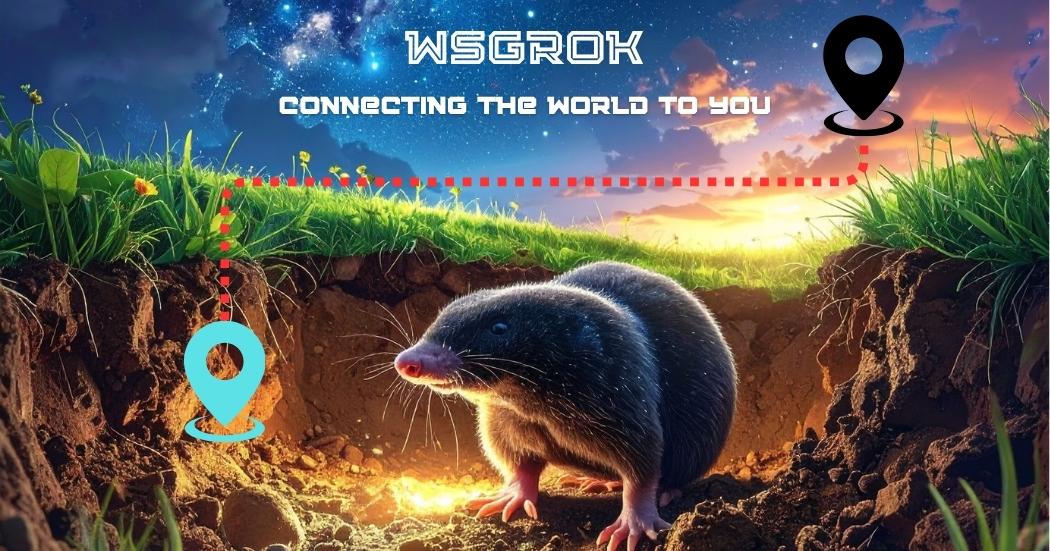
wsgrok is a secure tunneling service designed specifically for developers who need to expose their local development servers to the internet quickly and safely. The product creates HTTP tunnels that allow developers to share their locally hosted applications, webhooks, or APIs with external services, collaborators, or clients without deploying to a public server. It serves developers building integrations for platforms like Slack, Discord, and Microsoft Teams, as well as those needing to test webhooks, demonstrate features, or collaborate remotely. The primary purpose is to eliminate the complexity of network configuration and provide a seamless bridge between local development environments and the public internet, enabling real-time testing and sharing.
Developers often face significant challenges when they need to test webhooks, demonstrate applications to stakeholders, or collaborate with team members on locally hosted projects. Traditional methods involve complex port forwarding, VPN setups, or deploying to staging servers, which are time-consuming and require networking expertise. These pain points delay development cycles, increase frustration, and hinder rapid iteration. wsgrok addresses this by providing an instant, secure solution that requires minimal setup, allowing developers to focus on building rather than configuring infrastructure. The tool solves the problem of inaccessible local servers during development, making it easy to integrate with third-party services that require public endpoints.
The first major feature group is custom subdomains and global server locations, which provide developers with beautiful, unique URLs for their local services. Users can create named subdomains like myapp.us-west1.wsgrok.com, making endpoints easy to remember and share. The service operates across multiple global regions, including US West, US East, and upcoming locations in Europe and Asia, allowing developers to choose servers near them for minimized latency. This geographical distribution ensures that traffic is routed efficiently, providing a fast experience for end-users regardless of their location. The system automatically handles DNS configuration and routing, so developers don't need to manage domain settings or server deployments.
SSL encryption and enterprise-grade security form the second critical feature group, ensuring all data transmitted through wsgrok tunnels remains private and protected. Every tunnel is secured with TLS encryption, which safeguards sensitive information from interception or eavesdropping. The platform includes intelligent attack prevention mechanisms that detect and mitigate malicious traffic, protecting local development servers from common web threats. Additional security features like authentication support (Basic and Token methods) and IP restrictions give developers control over who can access their exposed services. This comprehensive security approach allows developers to share their work confidently, knowing their data and systems are protected by robust, production-ready safeguards.
admin
Developer-friendly tools and multi-platform support represent the third feature group, designed to integrate seamlessly into existing workflows. wsgrok provides a simple command-line interface (CLI) that works on Windows, macOS, and Linux, ensuring compatibility across entire development teams. The CLI requires just one command to start tunneling—for example, 'wsgrok 3000 my-awesome-webhook'—connecting a local server on port 3000 to a public subdomain. The platform also offers REST APIs for programmatic integration, enabling automation and scripting within CI/CD pipelines or development tools. Real-time analytics and performance metrics allow developers to monitor tunnel traffic, track usage, and identify issues without leaving their development environment.
The technical approach involves creating secure HTTP tunnels between a developer's local machine and wsgrok's cloud infrastructure. When a developer runs the CLI command, it establishes a persistent, encrypted connection from their local server to one of wsgrok's globally distributed edge servers. Incoming public requests to the assigned subdomain are routed through this tunnel to the local server, and responses travel back through the same secure path. The system is built on Google Cloud infrastructure, ensuring reliability, scalability, and high availability. This cloud-native architecture handles load balancing, automatic failover, and traffic optimization without requiring developer intervention, making the tunneling process both robust and transparent.
Benefits for users include dramatically reduced setup time, with first-time configuration taking just five minutes and subsequent tunnel creation requiring only seconds. Developers gain the ability to test webhooks and integrations in real-time with external services, accelerating development cycles and improving product quality. The service eliminates the need for complex networking knowledge or infrastructure management, allowing developers to remain focused on coding rather than DevOps tasks. Measurable outcomes include faster iteration, easier collaboration with remote team members or clients, and the confidence that comes from knowing their exposed endpoints are secured with enterprise-grade protection. The free pricing tier makes these benefits accessible without financial barriers.
Concrete use cases include building and testing webhooks for platforms like Slack, Discord, or Microsoft Teams, where developers need public URLs to receive notifications. A developer working on a Slack bot can run their application locally, expose it via wsgrok, and immediately start receiving and processing Slack events without deploying to a server. Another workflow involves demonstrating a new feature to a client: the developer starts their local development server, creates a tunnel with a custom subdomain, and shares the URL for instant feedback. Teams collaborating on an API can use wsgrok to expose their local instances, enabling parallel development and integration testing without interfering with each other's environments.
Target users are primarily developers, including those building web applications, APIs, bots, and integrations who need to expose local servers during development. The tool is ideal for individual developers, small teams, and larger organizations looking for a simple tunneling solution. It integrates seamlessly with any programming language or framework—such as Node.js, Python, Go, or Ruby—since it works at the HTTP level. The tech stack includes a lightweight CLI tool, cloud-based tunneling servers, and a web console for management. Pricing plans are transparent, with a free Pro tier offering 4 named subdomains, 6 random subdomains, and 20 GB of data transfer, making it accessible for most development needs.
In summary, wsgrok delivers immediate value by removing the friction of exposing local development servers to the internet. Its combination of custom subdomains, SSL encryption, global performance, and developer-centric tools creates a powerful yet simple solution for modern development workflows. By addressing the pain points of traditional methods and providing a secure, fast, and free alternative, wsgrok empowers developers to build, test, and share their work more efficiently. The primary takeaway is that developers can now focus on creating great software instead of wrestling with networking complexities, thanks to a tunneling service designed specifically for their needs.
wsgrok is designed for developers who need to expose local servers during development, including those building web applications, APIs, bots, and integrations. Target users range from individual hobbyists and freelance developers to small teams and larger organizations working on webhooks, Slack/Discord integrations, or client demonstrations. The tool is ideal for developers using any programming language or framework—such as Node.js, Python, Go, or Ruby—who require a simple, secure way to share their work without deploying to cloud servers. It appeals to developers seeking to eliminate networking complexities and accelerate testing cycles with instant, encrypted tunneling solutions.
Updated 2026-02-28